Receive FREE Reflections from the Editors of the SCI by EMail



SCI editor Doug Gerlach reviews what history tells us about stock-picking in times of military conflict.

Military conflict generally acts as a significant tailwind for the defense industry, often leading to performance that decouples from the broader S&P 500. While the general market frequently dips due to uncertainty, defense stocks tend to rise in anticipation of increased government procurement and long-term shifts in national security priorities.
Defense stocks often serve as a hedge during the onset of a conflict. When investors sell off cyclical or consumer-facing stocks due to fear of economic disruption, they frequently rotate capital into the Aerospace & Defense sector. Defense stocks often begin to climb before boots are on the ground, as soon as geopolitical tensions escalate and the likelihood of increased defense spending becomes clear.
For example, in the first two weeks following the Russian invasion of Ukraine in February 2022, while the S&P 500 remained volatile and down for the year, the S&P Aerospace & Defense Select Industry Index surged roughly 15-20%.
The impact on the industry is typically tied directly to the scale of military spending authorized by Congress. In the 1960s, defense spending rose from roughly 7% of GDP to over 9% to pay for the Vietnam War. Major contractors saw steady revenue growth in the period, though high inflation in the late '60s eventually pressured profit margins across all sectors.
From 2001 to 2011, the post-9/11 "War on Terror" pushed the defense sector to one of its most sustained periods of outperformance. The S&P 500 was essentially flat (the "Lost Decade"), while major defense contractors like Lockheed Martin and Northrop Grumman saw triple-digit percentage gains.
In the six months following the start of the Iraq War in 2003, aerospace and defense stocks outperformed the S&P 500 by more than 10% as the "budget ceiling" for defense was effectively lifted for supplemental war funding.
Here are some factors that can help zero in on top prospects in the defense industries,
Strong Backlog Growth: Investors look at book-to-bill ratios. A conflict often leads to multi-year contracts for replenishing munitions, drones, and missile defense systems (e.g., HIMARS or Javelins), providing "guaranteed" revenue for years.
Bipartisan Support: Defense is one of the few areas of the US budget that historically maintains strong funding regardless of which party controls Congress, especially during active conflicts.
A Shift to Technology: Modern conflicts have shifted focus toward high-margin electronic warfare, cybersecurity, and satellite technology, rather than just "heavy steel" (tanks and ships), which has improved the profitability profiles of many firms.
Despite the boost related stocks may receive, the industry faces unique risks during wartime. Conflicts can cut off access to critical raw materials (like titanium or neon gas), delaying production, while fixed-price contracts can be counter-productive. If a conflict causes high inflation (as seen in the 1970s), defense companies locked into fixed-price government contracts may see their profit margins eroded by rising labor and material costs.
The SmallCap Informer covers several companies that operate in industries connected to aerospace and defense. One micro-cap, M-tron Industries (MPTI) has gained a whopping 125% to date since being initiated in the newsletter.
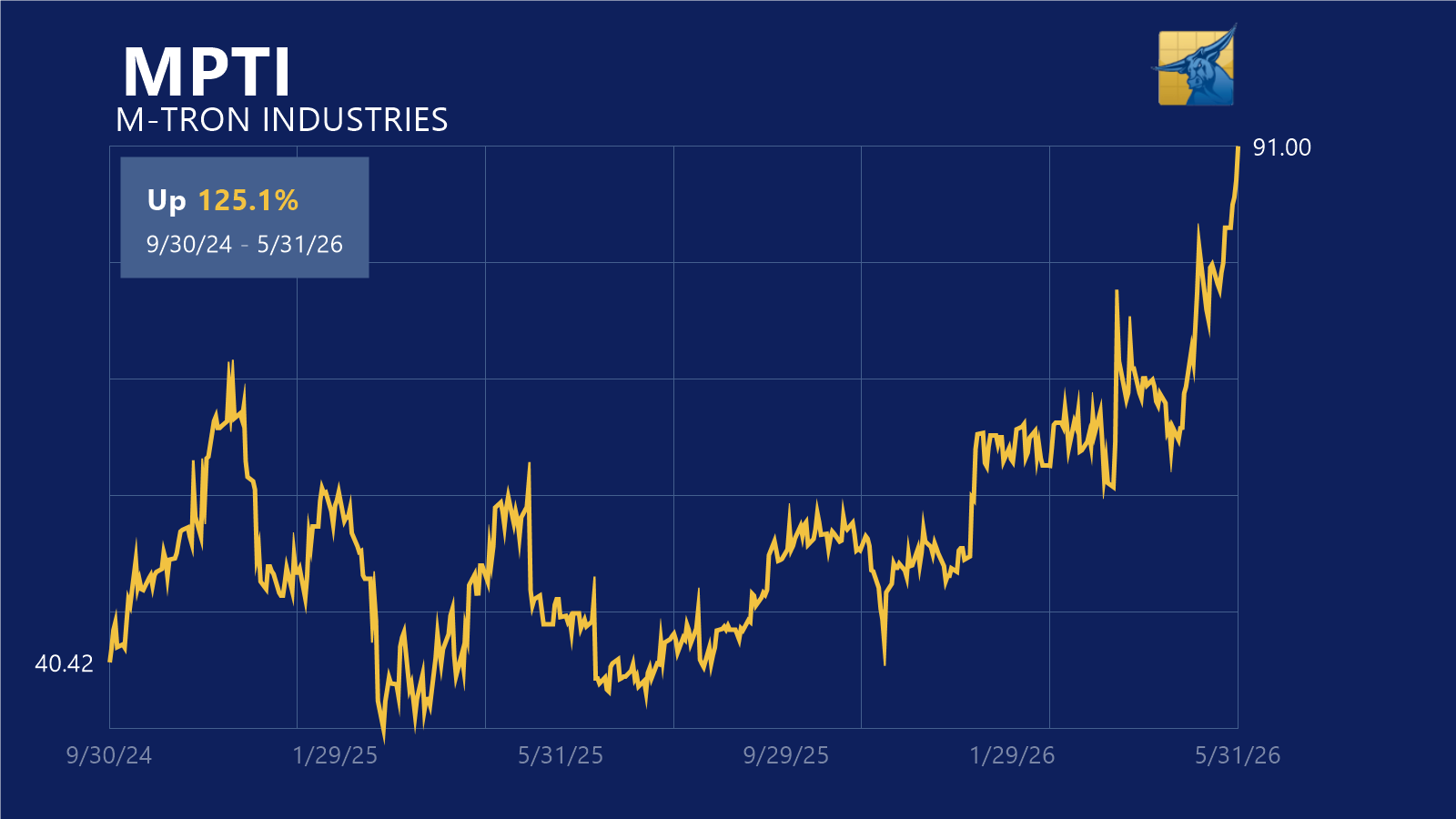
The company has achieved significant success through its execution of a niche, highly engineered product strategy within the expanding defense and space electronics markets. By focusing on customized, ruggedized components that meet strict size, weight, and power (SWaP) constraints for electronic warfare and satellite communications, the company commands immense pricing power, driving its order backlog and maintaining robust gross margins. This high-margin revenue visibility is further supported by an aggressive innovation cycle that introduces over 200 new products annually, alongside a virtually debt-free balance sheet.
Ultimately, M-tron’s structural resilience, strategic alignment with defense modernization tailwinds, and bulletproof capital cushion have insulated it from broader economic volatility while fueling sustainable, high-quality small-cap growth.
Get more great small-company ideas like M-tron Industries in each issue of the SmallCap Informer stock newsletter. Not a subscriber? Subscribe to the SmallCap Informer and get monthly small company stock recommendations and updated buy/sell prices for each of the ~40 high-quality small company stocks currently covered in the newsletter.
©Equity Research Service. All Rights Reserved. Privacy Policy. Terms of Use.